Urban Gardens: A Beginner's Guide
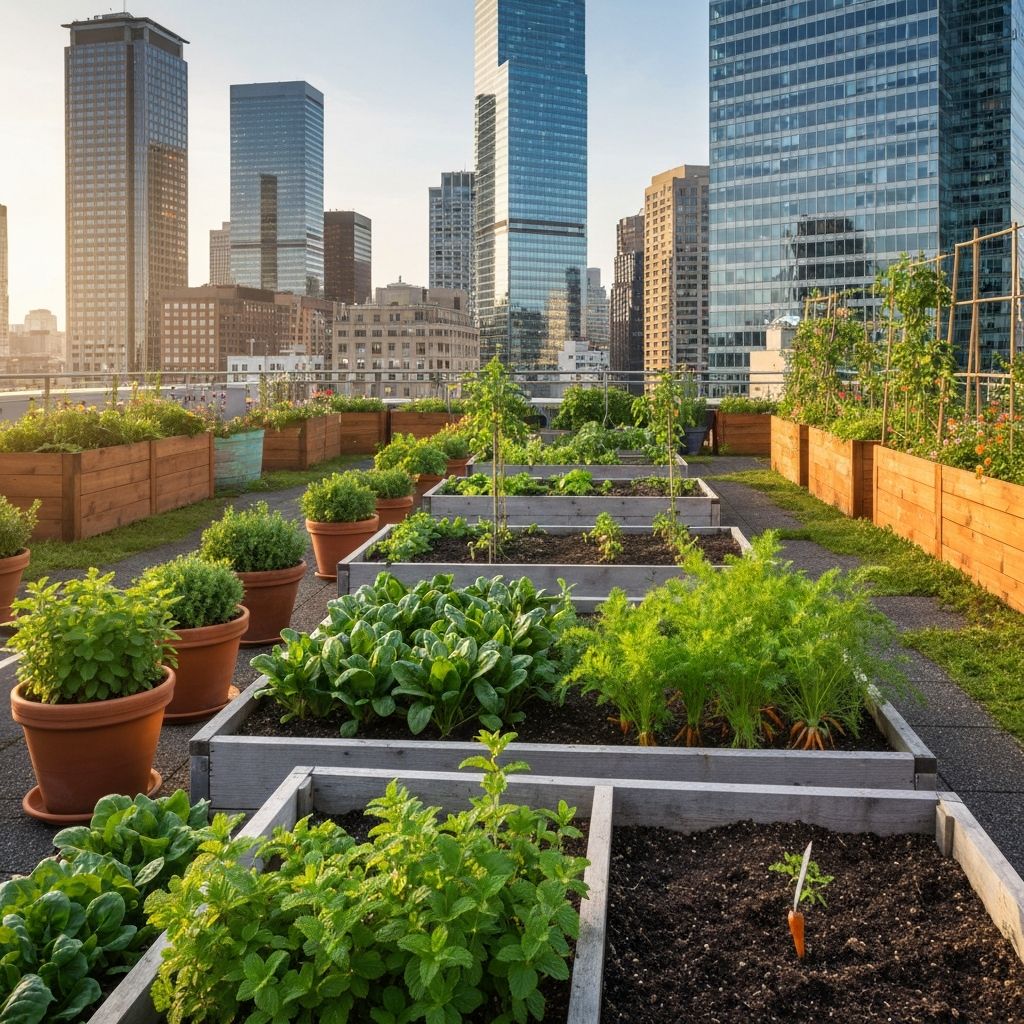
Your First Urban Garden
You don't need a large yard to grow your own food. With a balcony, terrace, or even a sunny window, you can start your urban farming adventure.
Benefits of Urban Gardens
- Fresh food: Nothing beats the taste of freshly harvested vegetables.
- Connection with nature: Growing plants reduces stress and improves well-being.
- Education: Ideal for teaching children about the food cycle.
- Sustainability: Reduce your carbon footprint by eliminating food transportation.
What You Need to Get Started
#
Space
Evaluate your available space:
- Small balcony: Vertical pots and planters
- Large terrace: Raised beds or large containers
- Community space: Shared gardens with neighbors
#
Sunlight
Most vegetables need at least 6 hours of direct sunlight. Observe your space for several days to identify the best locations.
#
Basic Materials
- Containers with adequate drainage
- Quality potting mix
- Seeds or seedlings
- Watering can or irrigation system
- Basic tools (small shovel, pruning scissors)
Recommended Crops for Beginners
1. Cherry tomatoes: Productive and easy to grow
2. Lettuce: Fast growing, ideal for beginners
3. Aromatic herbs: Basil, mint, parsley
4. Radishes: Harvest in just 30 days
5. Spinach: Tolerant of partial shade
Conclusion
Starting an urban garden is simpler than it seems. Start small, learn from your mistakes, and soon you'll be enjoying your own home-grown food.
Written by
Solarpunk Paradise
Sustainability expert and community activist. Author of the Building Green Futures guide.
Enjoyed This Article?
Get the complete guide with 150+ pages of practical content
Get the Complete Guide